Project notes
How one room carries a whole game.
The room
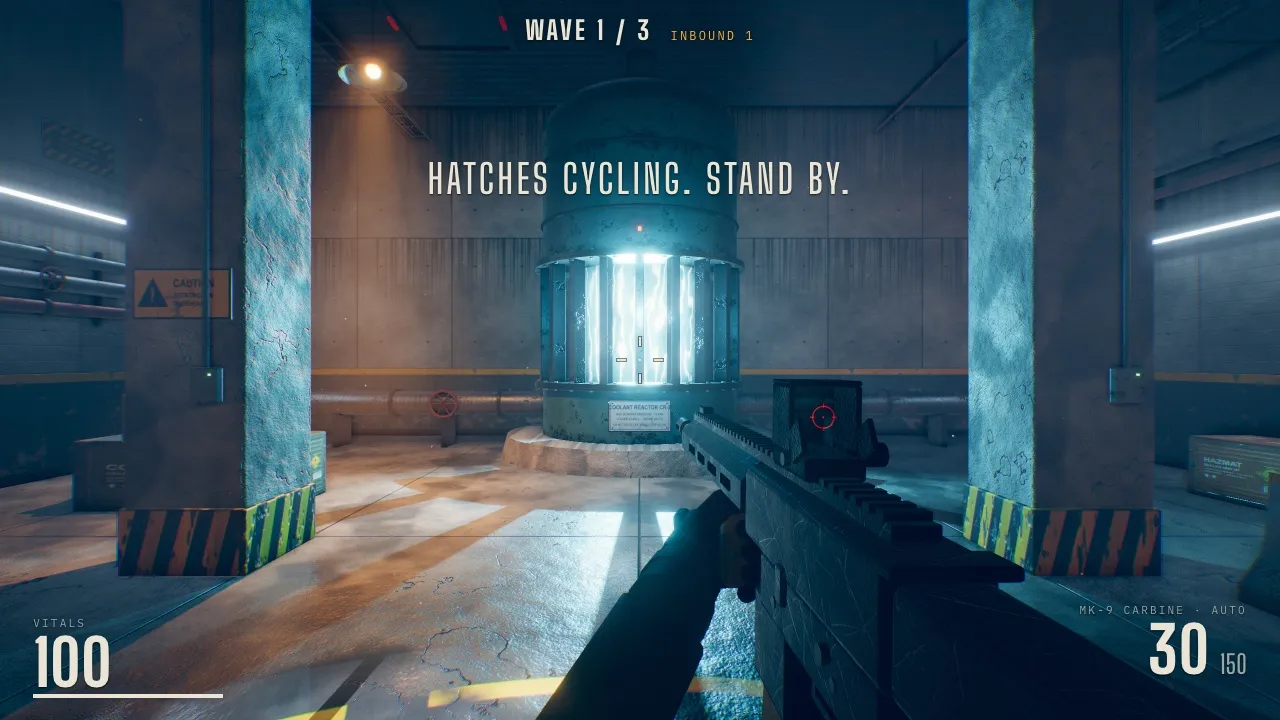
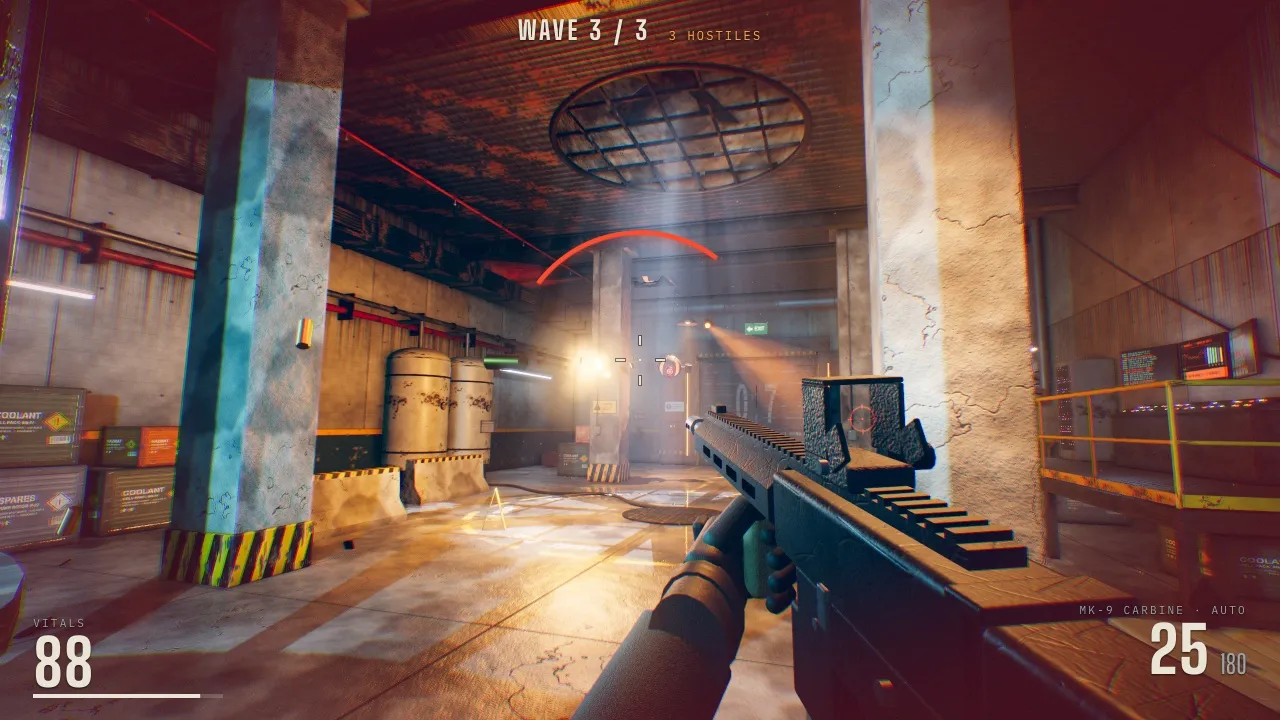
A sump hall 26 by 16 metres: a fan shaft with a shaft of daylight, a control deck with stairs and monitors, a reactor with a glowing core, tanks, ducts and crates, and two hatches the drones drop from. Puddles on the floor reflect the room around them.
Made in code
Each surface is painted on a canvas from noise, so one pattern gives a material its colour, its bumps and its shine. About sixty sounds, each with several takes, are computed sample by sample while the page loads, along with the hall's own echo.
The fight
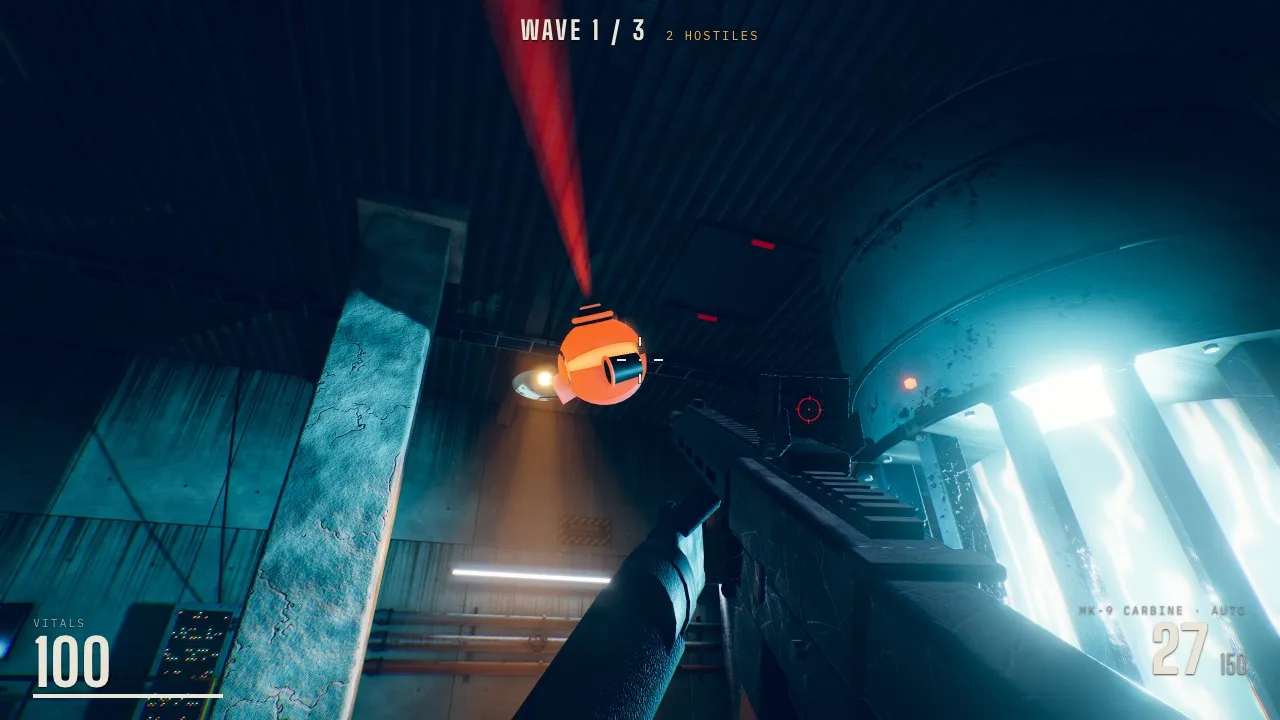
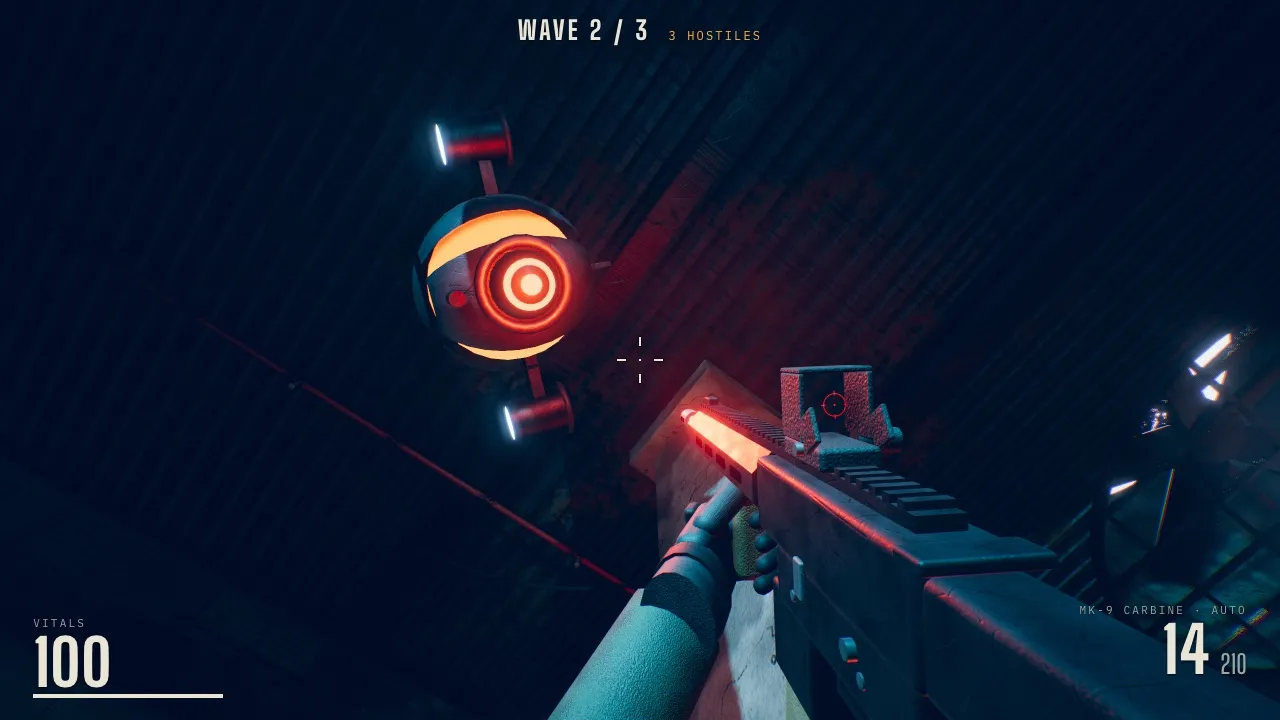
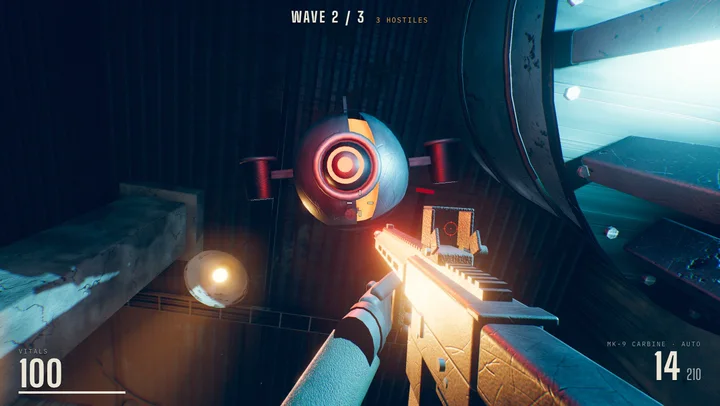
Drones drop from the hatches, bank, strafe, charge and fire bolts you can sidestep; a hit drone spins out and crashes before it blows. The carbine kicks, sways and reloads on a timeline: the magazine drops, bounces, and a new one goes in.
Built to adapt
Quality runs from Low to Ultra, with an automatic setting that steps down quickly when frames slow and climbs back slowly. Keys are bound by their position, so Z Q S D on a French keyboard work as W A S D do, and the menu shows your keyboard's own letters.
Tested by a bot
A scripted player runs the whole game, all three waves, as the logic test. The preview clip and the frames on this page come from that bot playing the published game, recorded one step at a time.